
After a fire in Qatar, first make sure Civil Defence has declared the property safe, then document the damage for insurance and start professional cleaning as soon as possible. Soot is oily and acidic, so within days it can permanently stain and corrode walls, metal, stone and electronics, and smoke odour moves through AC ducts into rooms the fire never reached. Professional post-fire cleaning removes soot with dry sponges and specialist cleaners, cleans the AC system and neutralises odour rather than masking it.
- Only enter after Civil Defence or building management confirms the property is safe, and keep the electricity off until it has been checked.
- Take photos and videos of every room before cleaning; your insurer will usually ask for them.
- Start cleaning within 24 to 72 hours: soot residue becomes harder and more expensive to remove every day.
- Do not wipe soot with water or household sprays; this smears it deeper into paint, grout and fabric.
- Smoke odour travels through AC ducts, so the AC system must be cleaned or the smell will return.
What should I do in the first 24 hours after a fire?
- Safety first. Wait until Civil Defence or building management confirms the home, villa or office is safe to enter. Do not switch electrical circuits back on until an electrician has checked them.
- Document everything. Photograph and film every room, ceiling, appliance and item before anything is moved or cleaned. Note serial numbers of damaged electronics.
- Call your insurer and landlord. Ask what they need from you and whether they have approved contractors.
- Ventilate carefully. Open windows if it is safe, but keep the AC off so soot is not pulled through the ducts into other rooms.
- Protect what is undamaged. Close doors to unaffected rooms and remove valuables, documents and medicines if you can do so safely.
- Do not start scrubbing. Household cleaning on soot usually makes stains permanent. Book a professional assessment instead.
Why does soot cause so much damage?
Smoke from burning plastics, furniture foam, cables and kitchen oils produces fine, oily and acidic particles. These particles settle on every surface, including rooms far from the fire. In Qatar's warm indoor conditions the residue bonds to surfaces quickly:
| Surface | What happens if soot is left | Typical timeframe |
|---|---|---|
| Paint and plaster | Yellow and grey staining that bleeds through new paint | Days |
| Marble, granite and grout | Etching and deep discoloration of porous stone | Days to weeks |
| Chrome, aluminium and steel | Pitting and corrosion | Days to weeks |
| Electronics | Corrosion of circuits and connectors | Weeks |
| Fabrics, carpets and sofas | Permanent odour and staining | Days |
| AC ducts and filters | Spreading of soot and odour to every room | Immediately once AC runs |
This is why early cleaning saves money: much of what looks ruined in the first week can still be restored, while the same item may need replacing a month later.
Why does the smoke smell come back?
Smoke odour molecules penetrate soft furnishings, wardrobes, gypsum ceilings and especially AC ducts. In Qatar homes the AC runs almost constantly, so if the ducts, fan coil units and filters are not cleaned, the system blows odour and fine soot back into the rooms every day. Air fresheners and scented sprays only mask the smell for a few hours. Lasting odour removal needs three things: removing the soot source, cleaning the air system and treating the remaining odour with professional deodorising methods.
What can be saved after a fire?
| Item | Usually restorable? | Notes |
|---|---|---|
| Hard floors, tiles and stone | Yes, in most cases | Specialist cleaners and sometimes polishing |
| Painted walls and ceilings | Often | Cleaning plus stain-blocking primer if repainting |
| Kitchen cabinets and appliances | Often | Depends on heat damage and grease-soot mix |
| Sofas, curtains and carpets | Sometimes | Depends on soot type and how quickly treated |
| Clothing and linen | Often | Specialist laundering for smoke odour |
| Mattresses and pillows | Rarely if heavily affected | Usually safer to replace |
| Food, medicines and cosmetics | No | Discard anything exposed to heat or smoke |
| Electronics | Case by case | Have them checked by a technician before use |
How does professional post-fire cleaning work?
Our post-fire cleaning team follows a structured process:
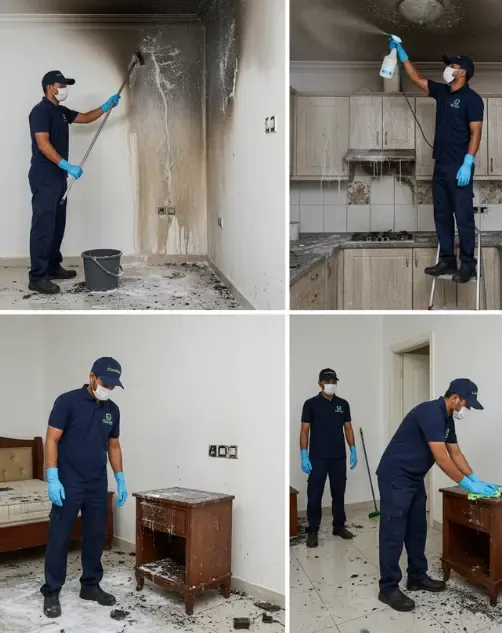
- Assessment and scope. We inspect every room, identify soot types and agree what will be cleaned, restored or replaced, with photos for your insurer.
- Debris removal. Safe removal and bagging of burnt materials and items you have chosen to discard.
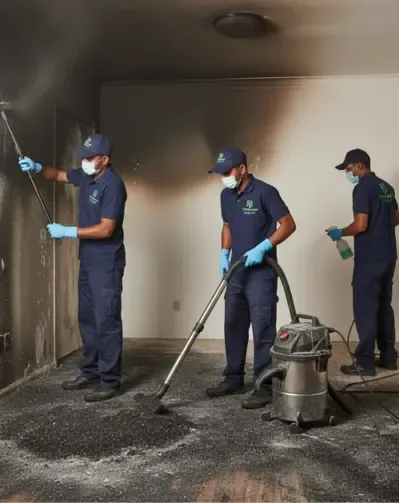
- Dry soot removal. Chemical dry sponges and HEPA vacuums lift loose soot without smearing it.
- Wet cleaning. Specialist degreasers and soot cleaners for walls, ceilings, cabinets, tiles and fixtures.
- AC and duct cleaning. Cleaning of AC units, grilles, filters and ducts so soot and odour are not recirculated.
- Soft furnishings. Deep cleaning of sofas, carpets and curtains, or advice where replacement is better value.
- Odour neutralisation. Professional deodorising treatment to break down smoke odour molecules, not mask them.
- Final check. A walkthrough with you and before and after photos for your records.
Kitchen fires: the most common case in Qatar
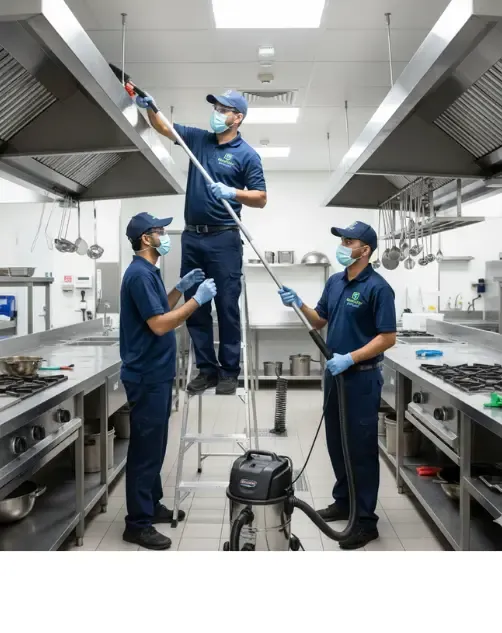
Many of the fires we restore in Doha, The Pearl and Lusail apartments start in the kitchen, from cooking oil or an extractor hood. Grease-based smoke leaves a sticky residue that is harder to remove than dry soot, and grease that has built up inside the hood and duct can make the fire worse. After the clean-up, we strongly recommend kitchen duct and hood cleaning, and for restaurants and hotels this should be on a regular schedule.
Fires in high-rise apartments: The Pearl, Lusail and West Bay
In tower apartments, smoke often travels into corridors, neighbouring units and shared ducts even when the fire was small. Building management may also require specific contractors, working hours and waste disposal routes. We coordinate with facility management teams, protect lifts and common areas during the work and provide documentation for the building, which makes the handover smoother for tenants and owners.
How much does post-fire cleaning cost?
Costs depend on how many rooms are affected, the type of soot, whether AC ducts need cleaning and how many furnishings are being restored. A small kitchen fire is very different from smoke damage throughout a villa. We provide a free on-site assessment and a written scope that you can share with your insurer.
Had a fire at home or work? Call or WhatsApp +974 709 709 29, 24/7, for an urgent assessment, or see our post-fire cleaning service.
Free quote on WhatsApp